
How far is too far?
Every mobile operation eventually takes on a job that's too far, and the honest assessment afterwards is awkward. The distance isn't usually the issue. The issue is a coverage area set from ambition rather than what a van can realistically achieve in a day.
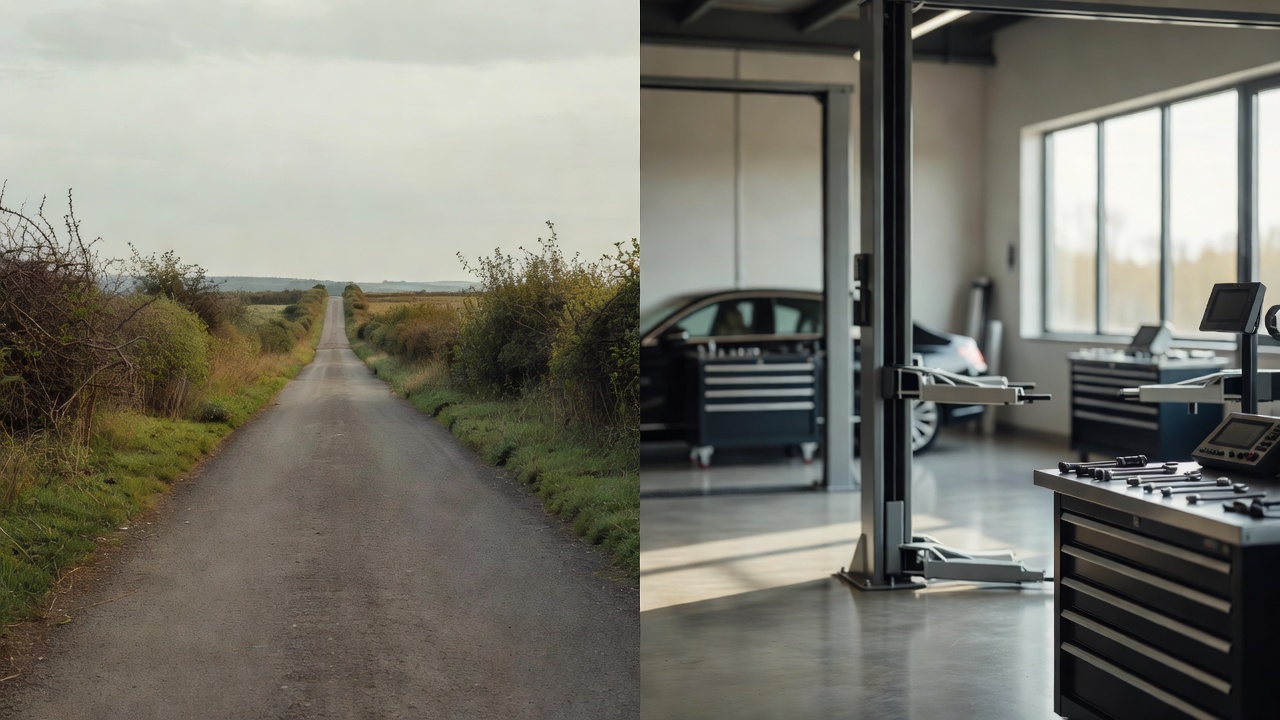
Distance is the wrong measure
A radius on a map treats twenty minutes of motorway and twenty minutes of town traffic as equal, but they are not comparable.
Drive time is the true measure, and it varies by the hour. A job thirty minutes away at ten in the morning can take an hour at four in the afternoon, turning an efficient afternoon into just one job.
Practically, a mobile fitting coverage area should be shaped, not circular. It follows fast routes and stops where they slow, looking nothing like a perfect circle.
Set the boundary by job value, not goodwill
At the boundary, the question is straightforward: does this job justify the time taken, including both ways and the risk of cancellation?
A minimum job value at distance resolves that without needing a decision each time. So does a rule that distant jobs are only offered on days you're already heading that way, which costs the customer a wait and costs you nearly nothing.
Deciding on a case-by-case basis out of goodwill doesn't work. Each yes seems reasonable, but it leads to a van making long unpaid trips.
Clustering outperforms coverage.
A densely worked small area earns more than a sparsely worked large one, which is counterintuitive for growth.
- Two jobs on the same street cost about the same as one job.
- A compact area generates repeat customers and referrals that support each other.
- Short gaps between jobs absorb overruns, while long drives increase them.
- Stock decisions become easier with a familiar vehicle mix in your area.
- A reputation grows quicker when the same neighbours see you regularly.
Expanding the boundary seems like the obvious growth strategy, but it's often wrong before the current area is saturated.
Be clear and prompt in saying no.
The worst outcome is not turning down a job; it's accepting one you shouldn't or letting the customer find out the issue at booking.
Coverage must be clear before someone books. A customer informed early that they are outside the mobile area and offered a workshop option may still be retained. One who reaches the final step and is then turned away will not.
Declining gracefully is a marketing tactic. Being told clearly that someone is too far away, with a recommendation of who isn’t, is remembered more than silence.
Let the boundary shift with the day.
A fixed boundary oversimplifies; a more useful version is flexible.
If the van is already heading a certain way, jobs further out cost less than on another day. A booking system that knows the van's location can offer those slots and decline others, without daily calculations.
This distinguishes a coverage area as a marketing claim from one as an operational rule. The first is just a number; the second determines what the customer receives.
Examine it with actual figures.
Most businesses set a radius once and never reassess, meaning the boundary is based on assumptions from the first month of trading.
Key figures to check biannually include drive time per job by area, the proportion of edge jobs worth taking, and the reasons for declined enquiries.
The last point often surprises. A pattern of declines from one direction indicates a market to serve properly or a boundary to honestly redraw, both better than accidentally saying no.
Common questions
What size should a mobile fitting coverage area be?
Compact enough to operate densely. A smaller area worked efficiently earns more than a larger one worked sparsely, as two jobs on one street cost little more than one, while two jobs at opposite ends double the driving.
Should coverage be measured in miles or minutes?
Minutes, and by time of day. A radius on a map treats motorway and town traffic as equivalent when they are not, which is why a true coverage area is shaped, not circular.
How do I manage jobs just outside the area?
Use a rule, not case-by-case: set a minimum job value at distance, or offer them only on days you're already heading that way. Individual goodwill leads to long unpaid drives.
When should I increase my coverage area?
Only after the current area is full. Expanding seems like growth but is often wrong while there's still work to win nearby.
What is the cost of turning down a job poorly?
Greater than turning it down outright. A customer informed they're outside the area and offered a workshop may still return. One who gets to the final booking step and is then refused won't.
Read more like this
Tyre pricing without the spreadsheet
Tyre pricing by hand drifts out of date the moment a supplier list changes. Price by rule instead, and let the rules do the updating.
Vehicle registration lookup
Vehicle registration lookup removes the biggest drop-off in online tyre sales: the moment you ask a customer for a size they do not know.
The EU tyre label on your storefront
The EU tyre label is an obligation and a sales tool. Here is what a shop has to display, where the data comes from, and how to use it to trade up.