
Air conditioning servicing, the service few promote.
Most workshops can service air conditioning, yet many rarely mention it. It's one of the few add-on services that sells itself to existing customers, requires no new customer acquisition, and follows a natural annual cycle.
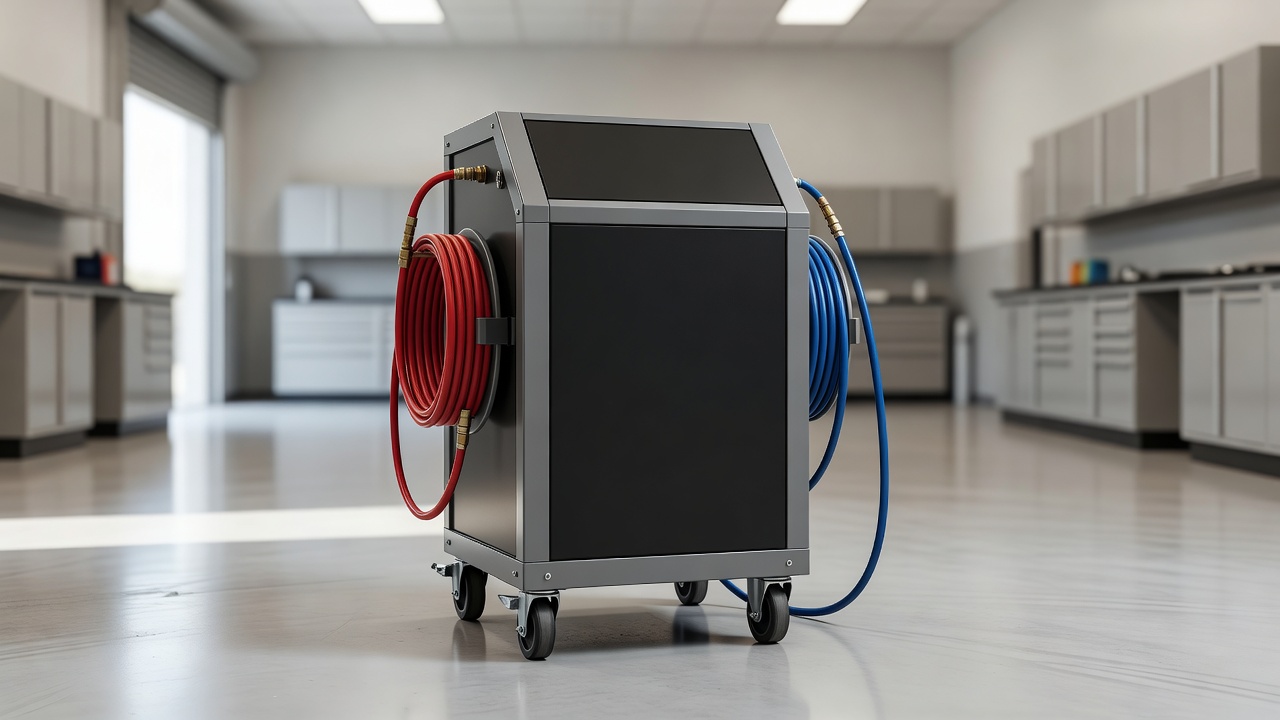
Why it is underused
The work is simple, margins are good, yet most garages wait for customers to ask.
This is often because no one has taken responsibility. Air conditioning servicing isn’t scheduled like an oil change, so unless mentioned during another job, it’s overlooked, and customers assume it’s fine until it fails.
The solution is a process, not a campaign: check and mention it on every vehicle during the season. This habit converts better than any ad, as you already have the car.
Choosing equipment
A service machine is a significant investment, and specifications matter more than ever.
Vehicles use various refrigerants based on age and market, and a machine for one type won’t work for another. A garage with a mixed fleet may need to manage both, either with two machines or by choosing one and referring the other, a decision to make intentionally.
The payback is usually positive if the service is sold, linking back to the previous point. A machine bought but unused because no one mentions the service is the costliest outcome.
Refrigerants are regulated
This is non-negotiable and varies by country, so treat your local regulator as the authority.
Handling refrigerants typically requires certification; recovery is mandatory, not venting, and there are usually record-keeping obligations. Some refrigerants are flammable, affecting storage and handling requirements beyond just paperwork.
None of this should deter you. It’s a reason to incorporate it from the start, as retrofitting compliance to an existing service is far more disruptive than including it in the setup.
Sell the diagnosis, not just the recharge.
The common error is providing a fixed-price recharge as the complete service.
- A system low on refrigerant has lost it somewhere; recharging without investigation is just refilling a leaking unit.
- A performance check before and after provides the customer with proof, not just a claim.
- A vacuum test differentiates gradual loss from a genuine leak and only takes minutes.
- The condition of the cabin filter impacts results and is often overdue for replacement.
- An odour complaint is a separate task and should be charged accordingly.
Framed as a service with diagnosis, it’s a professional job at a fair price. As a cheap regas, it competes with the lowest local prices and returns next summer.
Electric and hybrid vehicles transform the role
In petrol or diesel cars, air conditioning is for comfort; in electric vehicles, it’s part of thermal management, maintaining battery and cabin temperature, and operates much more frequently.
This has two important implications. The systems work harder, making servicing more crucial, and many use electrically driven compressors needing specific non-conductive oil. Using standard compressor oil is a costly error, easily avoided with proper checks.
It also indicates that work is increasing, not decreasing, as the fleet evolves, which is rare among workshop services and justifies investing in it now rather than later.
Leverage the season and its shoulder.
Demand surges in the first real hot week, and by then, all slots are filled.
Successful workshops promote this before the season, not during, when they’re busy and customers have time. A spring reminder to those with weak air conditioning noted in winter servicing is nearly the easiest sale.
It also fills a typically quiet period, which is more valuable than the same revenue when bays are full. This is the real case for treating air conditioning servicing as planned, not reactive.
Common questions
Is air conditioning servicing profitable for a garage?
Margins are good, and acquisition costs are zero, as it sells to customers already there. The common mistake is buying the machine and waiting for requests, which is the costliest outcome.
What equipment is required?
A service machine compatible with the refrigerants you’ll encounter, which vary by vehicle age and market and are not interchangeable. A workshop with diverse customers either handles both or chooses one to serve and refers the other.
Is refrigerant handling regulated?
Yes, and it varies by country, so check your local regulations. Certification is usually required, recovery is mandatory, and record-keeping obligations apply. Some refrigerants are flammable, affecting both storage and paperwork.
Should I provide a fixed-price recharge?
Not as a complete product. A system low on refrigerant has lost it, so recharging without a vacuum test just refills a leaking container. When sold as a service with a performance check, it’s a professional job, not a price war.
When should I market it?
Before the season, not during it, when you have capacity and the customer has time. A spring reminder to customers whose air conditioning was weak during winter servicing is one of the easiest sales in a garage.
Read more like this
Tyre pricing without the spreadsheet
Tyre pricing by hand drifts out of date the moment a supplier list changes. Price by rule instead, and let the rules do the updating.
Vehicle registration lookup
Vehicle registration lookup removes the biggest drop-off in online tyre sales: the moment you ask a customer for a size they do not know.
The EU tyre label on your storefront
The EU tyre label is an obligation and a sales tool. Here is what a shop has to display, where the data comes from, and how to use it to trade up.