対象業種 ネットワーク 料金 無料で始める
カタログ

EUタイヤラベル as a shop problem.

Most guides to the EU tyre label explain what the letters mean to a driver. This one is about what it means to you: what you are obliged to show, where the data has to come from, and why the shops that display it well sell more premium fitments than the ones that hide it.

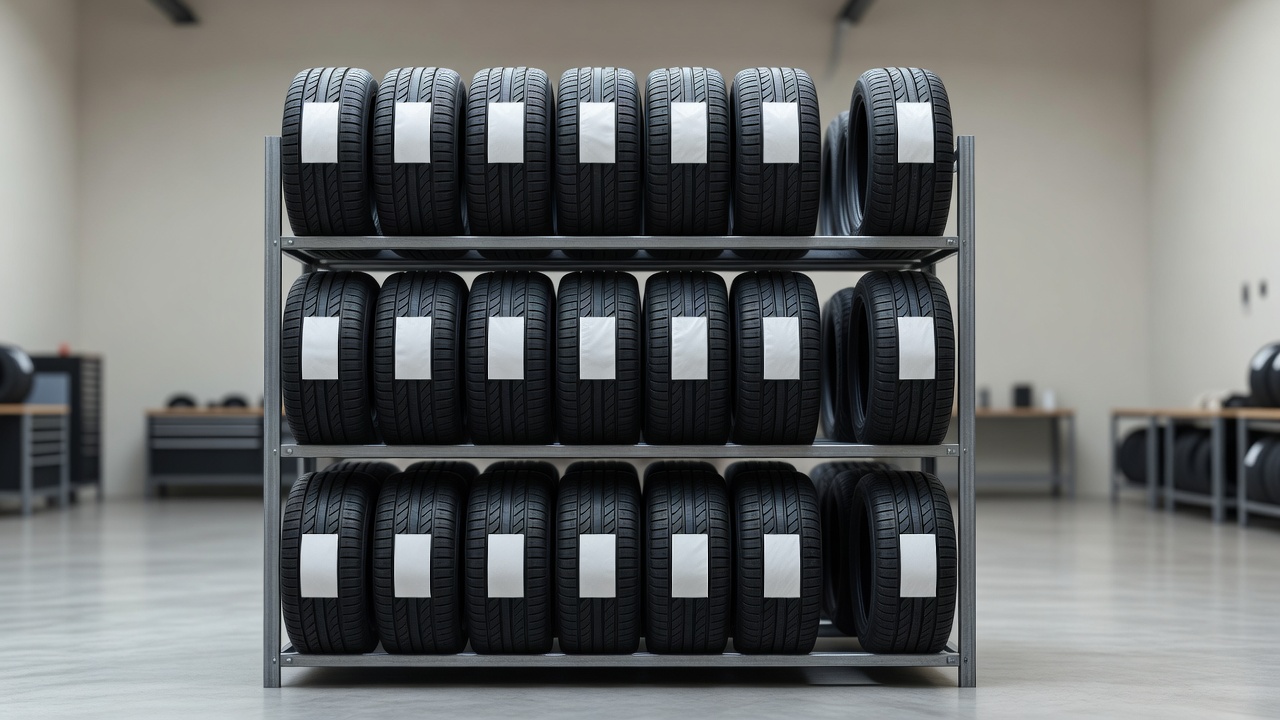
New tyres racked in a workshop with label stickers attached

What you are actually obliged to display

The obligation sits with the seller, not only the manufacturer, and it applies to distance selling as well as the shop floor. In practice that means the rating information has to be visible to the customer at the point they choose, not produced afterwards on request.

The exact wording and enforcement vary by market, so treat your local regulator as the authority rather than a summary like this one. What is consistent everywhere is the direction of travel: more disclosure at the point of sale, not less.

The practical risk for an online storefront is not usually a fine. It is a listing that cannot show ratings because the catalogue behind it does not carry them, which is a data problem wearing a compliance costume.

Where the data has to come from

Every tyre placed on the market is registered by its manufacturer, and the label is generated from that registration rather than from anything you type in.

That matters for a shop because it makes the label verifiable. A customer, a competitor or a regulator can look up the registration and compare it against what your listing claims, so ratings entered by hand from a supplier PDF are a liability rather than a shortcut.

The clean approach is to carry the registration identifier alongside each product in your catalogue and render the official label from it. Then your storefront cannot drift from the source, because it is showing the source.

Why displaying it well sells more, not less

Shops sometimes hide ratings on the assumption that a customer who sees a poor grade will buy the cheaper tyre anyway. The opposite is usually true.

Ratings give a customer a reason to trade up that is not your opinion. Wet grip in particular is a safety figure with an obvious meaning, and a customer comparing an A against a lower grade in the same size will frequently choose the A once the difference is in front of them.

Without the ratings the only visible difference between two tyres in a list is the price, and a list where price is the only variable is a list that sells the cheapest line every time.

Putting it where it does work

Placement matters more than presence. A rating buried on a product page reached after the choice has been made is decoration.

  • On the comparison list, so ratings are visible while the customer is choosing rather than after.
  • Next to the price, since the whole point is to make the price difference mean something.
  • With the official label available on the product page for the customer who wants the source.
  • On the quote or the emailed basket, where the decision often actually gets made at home.
  • In a form that survives a phone screen, since that is where most of these decisions happen.

The test is whether a customer could pick a tyre on grounds other than price without asking anyone a question.

What the label does not do for you

Worth knowing so you do not lean on it for the wrong job.

It says nothing about how long the tyre will last, which is often the biggest cost difference between two options and the thing customers most want to know. It says nothing about dry grip, comfort or how the tyre behaves at the limit. And it says nothing about snow performance, which is a separate sidewall marking.

So the label is a floor for informed choice rather than a complete sales argument. The shops that use it best pair it with their own experience of what wears well on local roads, which is knowledge a customer cannot get anywhere else and is a genuine reason to buy from you.

Making it a catalogue requirement, not a task

The recurring failure is a storefront where some products show ratings and others do not, because the data arrived from different suppliers in different shapes.

That inconsistency is worse than showing nothing, because a customer reads a missing rating as a bad one. If ratings are a selling tool, they have to be present across the range or the gaps do the opposite of what you intended.

Treat carrying the EU tyre label data as a property of the catalogue rather than a job someone does when they have time. Once it is a requirement of listing a product, the storefront is consistent by construction and the compliance question stops being an annual worry.

よくある質問

Does a shop have to display the EU tyre label?

The obligation sits with the seller as well as the manufacturer, and it covers distance selling as well as the shop floor, so ratings need to be visible when the customer chooses. The precise wording and enforcement vary by market, so check your local regulator rather than a summary.

Where does the label data come from?

From the manufacturer registration each tyre carries. The label is generated from that rather than from anything you enter, which is why carrying the registration identifier in your catalogue and rendering the official label from it is safer than typing ratings from a supplier PDF.

Will showing ratings push customers to the cheapest tyre?

Usually the reverse. Ratings give a customer a reason to trade up that is not your opinion, especially wet grip. Without them the only visible difference between two tyres in a list is price, and that list sells the cheapest line every time.

Where should ratings appear on a storefront?

On the comparison list next to the price, while the customer is still choosing, with the official label available on the product page for anyone who wants the source. A rating shown only after the decision is decoration.

What does the EU tyre label not tell customers?

How long the tyre will last, which is often the largest cost difference between options, along with dry grip, comfort and snow performance. That gap is where a shop's own knowledge of what wears well locally becomes a real reason to buy from you.